
Go to the other Priorities | 01 Taxation | 02 Health | 03 Economy | 04 States 2.0 | 05 External | 06 Transport | 07 Housing | 09 Machinery of Government | 10 Education
New Members of Environment & Infrastructure
- President: Adrian Gabriel 7069
- Vice President: Sally Rochester 7119
- Members: Alex Snowdon (N/A), Andy Cameron 7177, Bruno Kay-Mouat 6051
View the E&I 2026 Committee Workplan here
there is little expectation of Electricity getting cheaper for a very long time
The heading ‘Energy’ covers a number of areas, but of particular significance is what is happening (and intended to happen) to the provision of Electricity in Guernsey (the rest of the Bailiwick has somewhat different options). I intend to provide a number of posts discussing the provision of Electricity in rather more detail (it is an extensive subject), given I have sat as P&R 2020-25 representative on the Electricity Strategy Working Group and the Offshore Windfarm sub Committee. I was also Chair of the Political Oversight Panel for the Guernsey Development Agency and their particular plans for developing the Bridge also encompass a number of issue relating to Guernsey Electricity.
My biggest concern is that of cost. A simply massive investment is required to deliver The Electricity Strategy agreed by the Assembly this term. Unfortunately, that did not include a very similar sum to upgrade the local network in order to make it capable of delivering the sort of increase in demand that is projected. Of course, that investment won’t happen in one fell swoop, it can be amortised over 40 or more years. But it will require a considerable amount of money to be borrowed and it will have to be recovered via tariff’s to local users and, I have no doubt, will eventually require some subsidy from General Revenue. Indeed, my own view is that the provision of affordable electricity to both Businesses and Domestic users is a strategic necessity and my expectation is that a whole raft of factors is going to make costs of provision at a price that Islanders can afford on a ‘User Pays’ basis untenable.
What we do know
The world it seems at least, is trying to remove fossil fuels from the energy equation. Moreover, trying to do so by a number of deadlines that frankly have no chance of being met – the most common being 2050, just 25 years away. Putting whether this is a good idea or not aside for the moment, given that even after trillions of dollars have been spent over the past decade, fossil fuels still represent over 80% of energy consumed worldwide and in fact in terms of volume – is still rising. On top of which, the need for massive amounts of materials (including rare earths) to fulfil the promises being made by most nations (other than China and India), simply cannot be met by the available or even future mining needed. We would need literally 100s of new mines and given it takes about 15 years to start a mine before it delivers, let alone the refining capacity that would also have to be built to process the output – it just cannot happen by 2050.
On top of that stark fact and pertinent to our local situation, the national grids of all countries have nowhere near the carrying capacity for the demand that is projected – so the investment needed and the work and disruption it necessitates to upgrade is simply off the scale. It is therefore now being mooted that fossil fuels will have to be considered a ‘Transition’ source for the foreseeable future.
The folly of trying to rely solely on renewables before the infrastructure is in place to cope is nowhere better evidenced than in Germany. Just prior to the invasion of Ukraine (and dependent upon Russia for some 40% of cheap gas imports), they decided to switch off their 12 remaining Nuclear plants, having heavily invested in windfarm renewables. But when the Russian gas got cut off after the war started, they were in serious trouble, so much so, that the former Industrial giant that they have been as an economy, is now in a very serious state, because there simply isn’t enough energy to fuel the heavy plant that produces one of their biggest export – cars. To their credit, they built (in the space of a year) a massive LNG plant in order that American Shale gas could be imported as soon as possible. They have also had to resort to opening coal plants, such is the crisis. This is only one example of why we need to be more circumspect about the speed at which fossil fuels are removed from the energy mix.
But of course that same war put energy prices up all over the world and we are not immune from that impact. We have been spared some of the crazy spot prices that ensued immediately after the invasion because of our contracted arrangements with France via the CI grid (with Jersey). But that will come to an end and negotiations are already underway on a new contract and the indications are that it certainly isn’t expected to be on the same favourable terms as the existing one.
Internationally, we have the return of Trump and that certainly has ramifications – particularly the race to Net Zero as he has already withdrawn from the Paris Agreement and that will lead to all manner of outcomes. So, the future of our own Energy supply remains somewhat volatile, but I think it would be safe to say there is little expectation of Electricity getting cheaper for a very long time – and quite possibly, never.
You may be interested in these posts

Tuesday Talk-in Priority 8 – Energy 22nd April
Click here to view the entire Schedule and explanation on the Tuesday Talk-in pages. Paul Fletcher f…
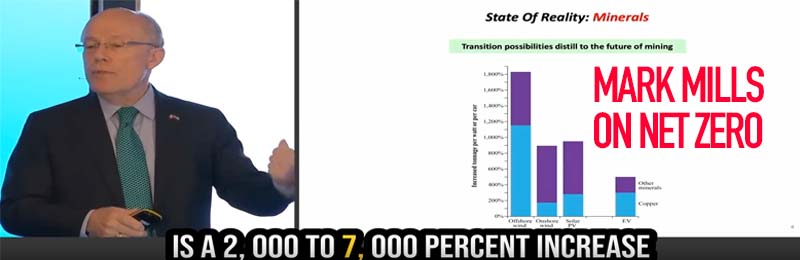
Why Net Zero cannot be achieved by 2050
Probably one of the most logical explanations of why aspirations to reach Net Zero are impossible &#…


What is driving up Electricity costs?
There is (and has been) considerable talk centred around the ‘Transition’ in energy. Thi…